
Dublin–Holyhead: Betreiber, Hafen und Anschluss
Dublin–Holyhead links Ireland with North Wales, but the sailing is only one part of the journey. Two operators, Irish Ferries and Stena Line, serve the route; their tickets, check-in instructions, terminal arrangements and available travel options must be compared separately. If you are travelling by car, allow for road travel on both sides. If you are connecting by rail or coach, the time needed to leave the port and reach the next service matters as much as the crossing itself.
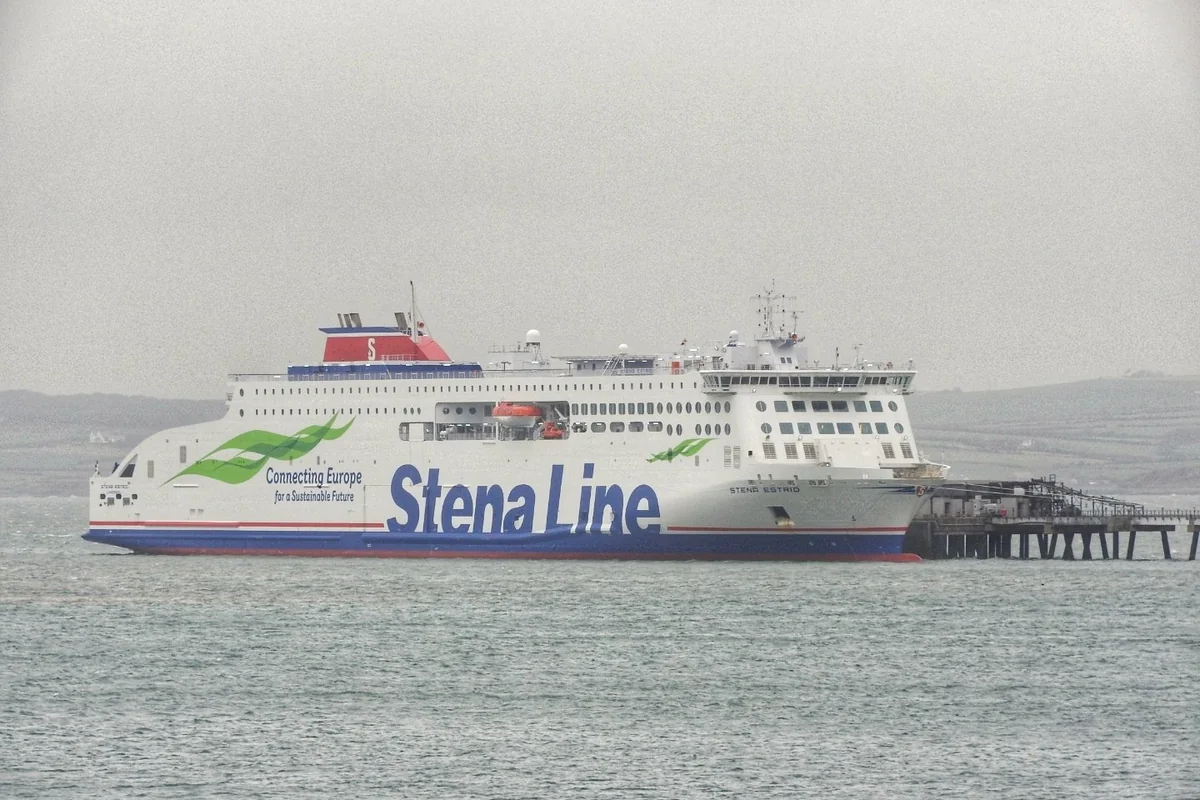 Die RoPax-Fähre Stena Estrid liegt im Hafen von Holyhead und bedient die Verbindung nach Dublin.
Foto: Hefin Owen / Wikimedia Commons, CC BY-SA 2.0
Die RoPax-Fähre Stena Estrid liegt im Hafen von Holyhead und bedient die Verbindung nach Dublin.
Foto: Hefin Owen / Wikimedia Commons, CC BY-SA 2.0
Choose the operator around the whole itinerary
Start with your travel date, direction and onward destination. Compare the available departures from both operators rather than assuming that similar route names mean identical timings or conditions. A sailing that fits the outbound trip may not suit the return. Check the ticket type, change rules, vehicle category and any extras for each direction. The Irish Ferries information and the page about Stena Line give background on the companies; the actual sailing and fare are determined by the booking for your date.
If you continue by train, look at the rail timetable before you select a ferry. Irish Ferries offers rail options on some bookings, while Holyhead also has onward rail connections; conditions and availability depend on the specific trip. A separate train ticket generally does not mean that the ferry will wait for a late train or that a train will wait for a delayed ship. Allow time to disembark, reach the station and find the correct platform. For other crossings between Ireland and Britain, compare the wider list of ferry routes only after considering the extra journey to a different port.
Dublin: terminal access and onward travel
Dublin is a large port area, so the right entrance depends on the operator and the type of passenger. Follow the terminal address and route in your booking rather than entering only “Dublin Port” in navigation. Drivers should check road directions and leave extra time for urban traffic; foot passengers should confirm how to reach their passenger terminal from the city or transport stop. The local page for the Dublin ferry port provides additional orientation, while the operator's instructions remain decisive for the booked sailing.
Keep tickets, identification and any required travel documents easy to reach. If you are travelling with a vehicle, check that the booking matches its actual dimensions and registration details. For foot travel, plan baggage so it can be moved from the transport connection through check-in and boarding without assistance unless support has been arranged in advance.
Holyhead: arrival in Wales and onward connections
Holyhead is on Anglesey, at the north-western end of Wales. From the port, onward travel may continue by road or rail; the suitable option depends on your final destination and arrival time. Do not assume that a short gap between the scheduled ferry arrival and a train is enough. The ship must berth, passengers must leave and the route to the station takes additional time. Check the service operating on your exact date, including late-evening or early-morning arrivals.
For local orientation, consult the page for the Holyhead ferry port. If driving onward, include the route from the port to your first stop and allow a break after the crossing. When returning from Wales to Ireland, recheck the port entrance, check-in deadline and direction; do not simply reuse the details from the outbound ticket.
Cars, larger vehicles and foot passengers
For a car booking, enter the correct length and height, including any roof box, cycle rack or trailer. A campervan or caravan may require a different category. Compare the physical vehicle with the booking confirmation before travelling, since an incorrect measurement can affect boarding and the fare. The guides to taking a car on a ferry and travelling with a motorhome or caravan cover details to prepare in advance.
Foot passengers should verify that their chosen departure accepts the travel type and identify the passenger entrance at both ends. If using a bicycle, check whether a place must be booked and how to reach the terminal without joining vehicle lanes. The practical guide to ferry travel as a foot passenger helps with baggage and boarding. Keep medication, valuables, documents and essentials in a bag that remains with you, since access to a vehicle during the voyage may be limited.
Check-in, pets and additional assistance
The check-in deadline is specific to operator, departure and ticket. Read it in the confirmation and arrive with enough time for traffic, terminal access and any required checks. General preparation is covered by check-in and travel documents, but the booked operator's latest instructions take priority.
Pets, wheelchair assistance and medical equipment should be declared or arranged before the travel day where required. Operators can have different rules about where an animal may stay and what documents are needed for entry. Confirm the requirements for the complete Ireland–Britain journey, not only one leg. If you need help boarding or moving through the terminal, contact the operator early and confirm the assistance in your booking.
Before you leave
Recheck the sailing, terminal, direction, check-in time and onward connection shortly before departure. Changes to timetables or port operations can alter the plan. Keep both operator and connecting-transport details available, and leave a buffer if accommodation, rail or a separate ticket is fixed. An efficient Dublin–Holyhead trip is the one where ferry, terminal and onward leg fit together, not simply the departure with the shortest advertised crossing.
Frequently asked questions
Which companies operate Dublin–Holyhead?
Irish Ferries and Stena Line publish their own bookings and travel instructions. Compare the exact sailing and terms for your date.
Can I connect to a train at Holyhead?
There are onward rail services, but check the actual timetable and allow time to leave the ship and reach the station.
Can I travel as a foot passenger?
Check that the selected departure accepts foot passengers and confirm the passenger terminal and transfer on both sides.
What should I check for a car or campervan?
Ensure vehicle class and dimensions include racks, roof equipment and any trailer, then compare them with the booking confirmation.
